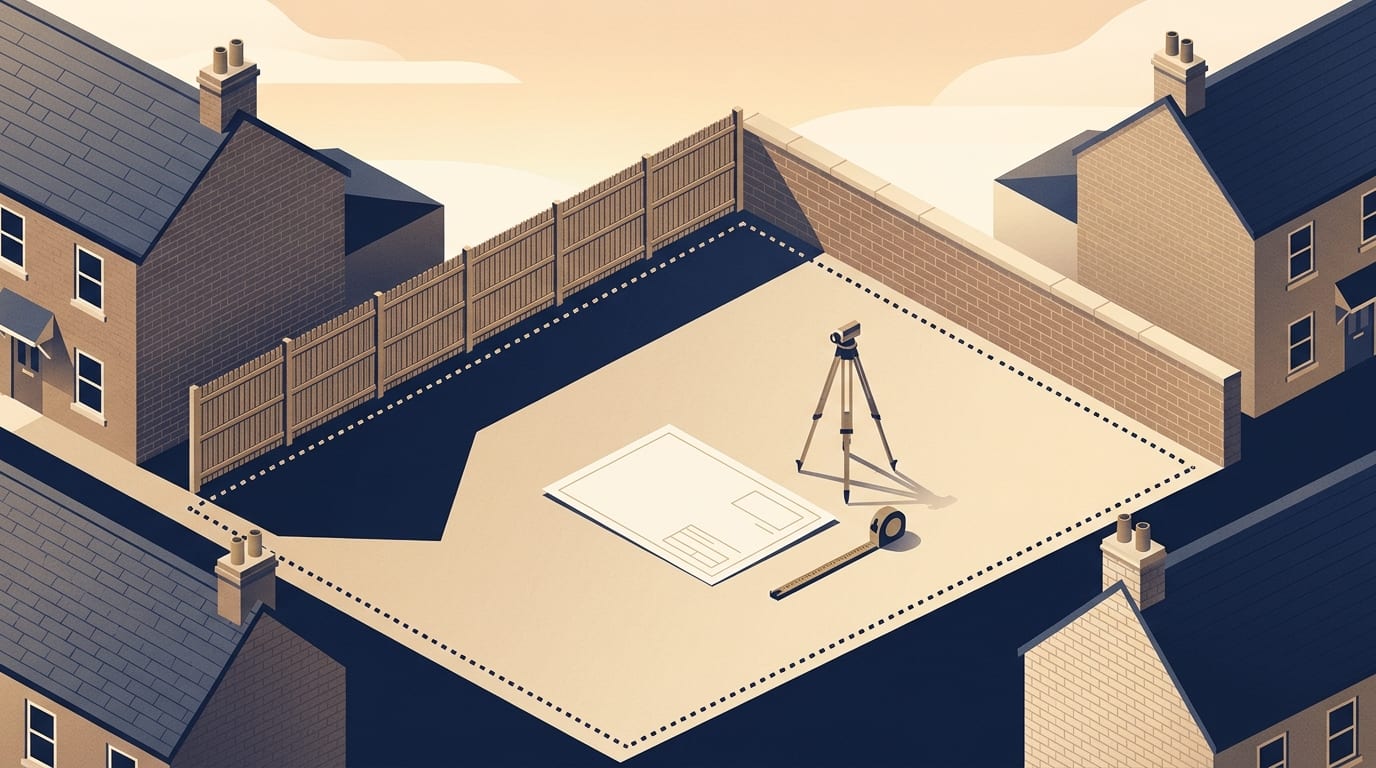
A build over agreement is the written consent you need from your water company before building over, or within three metres of, a public sewer. You also need this permission if you plan to build within one metre of a public lateral drain. The rules apply across England and Wales and protect the underground pipes that collect your wastewater.
What a build over agreement is
A build over agreement is a formal legal document granting you permission to construct a building or extension over or near an underground pipe. The Water UK guide for homeowners, written with the ten water companies in England and Wales that collect wastewater, sets out how the network is protected. It states that if you plan to build over, or within three metres of, one of their sewer pipes you will in some cases need consent from the water company. This lets the company protect its pipes.
The water companies have agreed that if a project meets certain standard conditions it will be approved, with only limited exceptions. If a company is relying on an exception to refuse standard approval, it must tell you within 14 days of receiving your application. Where a project does not meet the standard conditions, the water company deals with it on a case by case basis. This route will normally require a formal build over agreement between the homeowner and the water company.
The application process requires specific details about the people involved and the planned construction. Thames Water's application form says the details of the owners of the freehold must be provided because they will need to be a party to any agreement. The form also asks whether the foundations are already built and what exactly is being built. You must state whether it is a side, rear or front extension, a completely new building, underpinning work or a basement.
The form further asks when the existing property was built, noting that the age may help determine whether you need a build over agreement.
When you need permission to build over or near a sewer
The rules depend heavily on the type of underground pipe you are dealing with and how close your foundations will be. You need an agreement if you are building within three metres of a public sewer. You also need one if you are building within one metre of the point where a pipe serving only your property crosses your boundary and becomes a public lateral drain.
The Water UK guide defines these two distinct kinds of pipe clearly. Sewers carry wastewater from two or more houses and run within your property boundary. Lateral drains carry wastewater from a single house and meet the public sewer network outside that house's boundary. Water UK's guide also marks the dividing line between the pipes the homeowner is responsible for and the pipes the water company owns and looks after.
Building a completely new property requires a different approach to a standard domestic extension. Thames Water says building a new property needs a sewer diversion application instead.
Water mains are treated very differently from the sewers and drains that carry wastewater away. Water mains supply clean drinking water to homes and businesses. Building over or near water mains is generally strictly forbidden by the water companies. If your building plans might affect water mains, you should contact the water company that supplies your drinking water immediately to discuss the problem.
How to find out whether a public sewer runs under your land
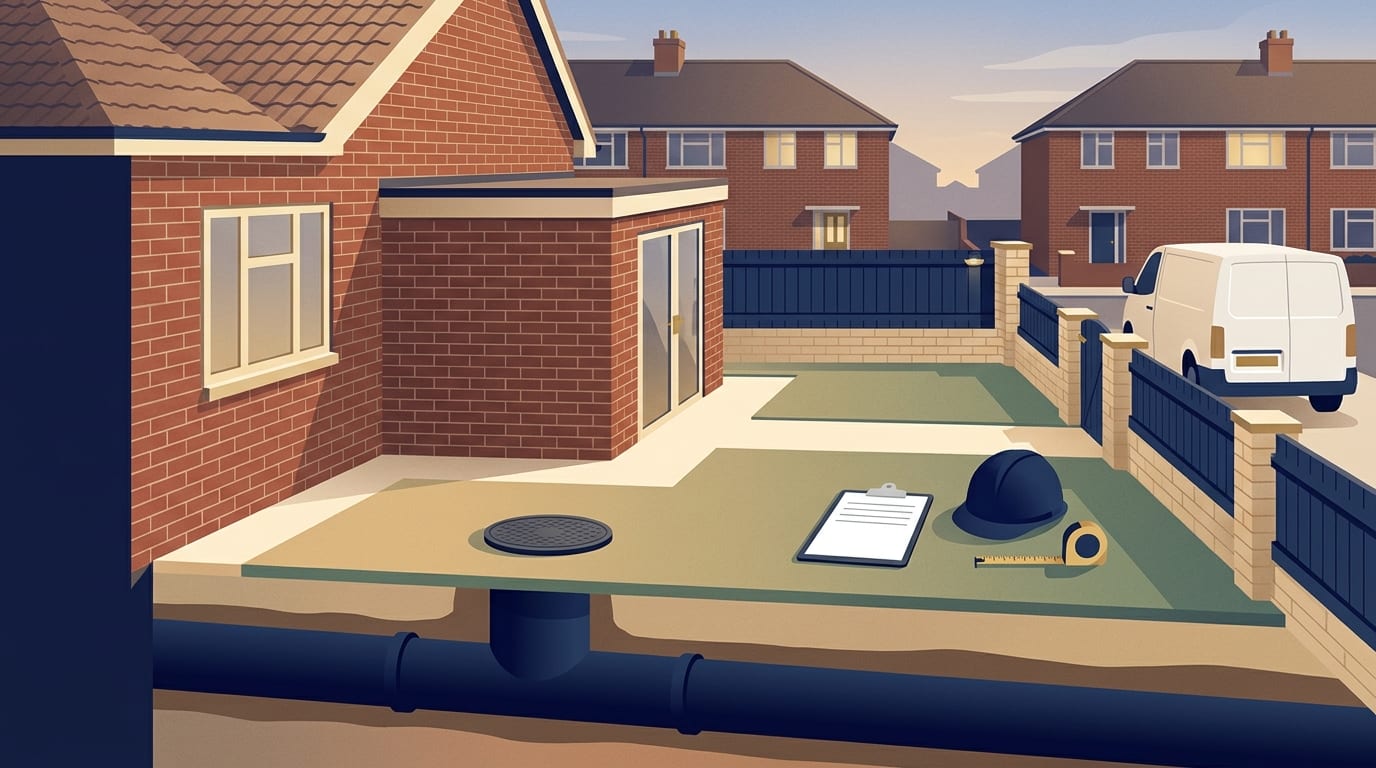
Identifying the underground pipes on your land is a vital early step in planning any building work. There are often tell-tale signs of pipework in your boundary, such as an inspection cover or a manhole cover in the garden. If you see one, tell your architect or builder.
Having no visible sign of drainage in your garden does not mean nothing is underground. If your property is connected to the public sewer network, there is likely to be a sewer or a lateral drain hidden inside your boundary. You will still need permission to build over or close to it, so you cannot ignore the issue just because there is no manhole cover on the lawn.
The Water UK guide lists several practical ways to find out what pipework exists around your home. You can use these steps to map the drainage before you finalise your extension design:
- Your architect or builder may be able to help identify the pipe locations.
- Details of drainage arrangements may be in the legal documentation for your property.
- The water company that collects your wastewater may help locate pipes, though there may be a charge for this.
Do not attempt to lift heavy manhole covers or dig exploratory holes yourself. Send these queries to your water company, hire a drainage specialist, or ask your conveyancer to review the property deeds. If you are buying the house, ask your conveyancer or a drainage specialist what checks suit the drains. You can read more about when buyers should get a drain survey to understand the process.
Why planning permission and building regulations are not enough
Planning permission or Building Regulations approval does not give automatic consent to build over or close to a water company's sewers.
The same rule applies to permitted development rights. Even if your planned conservatory or garage does not require formal planning permission, you must still secure the water company's consent. The council's approval and the water company's consent are separate matters.
Water UK's guide says planning permission, Building Regulations approval and permitted development rights do not give automatic consent to build over or close to a water company's sewers. Make sure the water company's consent is in place, alongside any council approvals, before you start building.
What a build over agreement costs
Fees are set by each water company. The table below shows the fees Thames Water gives, categorised by the sewer's internal diameter.
|
Class |
Sewer internal diameter |
Thames Water fee |
|---|---|---|
|
Class 1 |
175mm or less |
£130 |
|
Class 2 |
176mm to 350mm |
£490 |
|
Class 3 |
Over 350mm |
£585 |
These are one company's figures and never a national price. Thames Water states on its page that fees are updated every 1 April, and other water companies set their own fees.
Actual costs are charged for sewers over 350mm, and extra costs may apply for strategic or critical sewers. Thames Water's page also gives legal costs for Class 3 starting at £1,000.
Thames Water's application form lists reduced fees where the work is for someone entitled to Disability Benefit. Under these circumstances, a Class 1 application is free, a Class 2 application costs £360, and a Class 3 application costs £455.
Thames Water's page also covers a minor sewer diversion for a domestic extension. Where the sewer is 150mm or less in internal diameter and the diversion is 20 metres or less, it needs a refundable £2,000 cash deposit. This deposit is returned after Thames Water inspects the completed diversion. A CCTV survey is needed before the work starts and again after completion.
What happens if you build without one
Work should not start before the agreement is in place. Thames Water's page sets out what can happen if you build without one.
The water company may require you to make design changes to your extension to protect their pipes. Thames Water says design changes could add cost or delay. Liability for any damage to sewers or drains during construction falls on you.
Thames Water says it can seek an injunction to remove the building and potentially recover damages.
Without a build over agreement in place, you may not be granted a Building Regulations completion certificate, which Thames Water says could cause problems when selling.
Buying a house with an extension over a sewer
If your offer is accepted on a house that already has an extension, you must verify that the correct permissions were granted when the work was done. A home buyer's survey is a visual inspection of the property's condition and cannot see underground pipes. Ask your conveyancer to check the legal paperwork.
You should ask the seller to provide the formal build over agreement from the water company. You must also ask for the Building Regulations completion certificate from the local council. If the seller built an extension that was never signed off, ask your conveyancer what that means for you.
The age of the extension may matter because the rules on private sewers changed in 2011. According to the government, ownership of private sewers that run under people's property and connect to the public sewer system moved from homeowners to water companies on 1 October 2011. The water companies took over responsibility for repairing collapsed and blocked sewers from that date.
Ask your conveyancer whether the transfer, and the date the extension was built, matter for the property you are buying.
Questions to ask the seller and your conveyancer
The legal position on whether consent was needed, and whether it was properly obtained, belongs strictly to your conveyancer or solicitor. Ask them to explain what the paperwork does and does not show.
Questions to put to your conveyancer and the seller include:
- Did the seller obtain a build over agreement for the extension or conservatory?
- Does the local authority search show a final Building Regulations completion certificate?
- Was the extension built before or after the sewer transfer in October 2011?
- Do the legal documents for the property give any details of its drainage arrangements?
- Did the seller have to pay for a minor sewer diversion during the construction?
If the required paperwork is missing, ask your conveyancer or solicitor how to proceed.
Common questions
What happens if I am building over a public sewer?
If you are building over a public sewer, you must apply to the water company that collects your wastewater for formal consent. Thames Water says that without an agreement it can seek an injunction to remove the building and potentially recover damages.
How much does a build over agreement cost?
The cost depends on the water company in your area and the size of the underground pipe. Thames Water charges £130 for pipes up to 175mm, rising to £585 for pipes over 350mm, with legal costs for Class 3 starting at £1,000. Other water companies set their own fees.
Is building over a public sewer always allowed?
Building over a public sewer is not always allowed, as the water company deals with complex cases individually. If your project meets their standard conditions it will normally be approved, and where it does not, it is dealt with case by case. Building over or near water mains that supply clean drinking water is generally strictly forbidden.
Who owns the lateral drains under my garden?
Lateral drains carry wastewater from a single house and meet the public network outside that boundary. Water UK's guide marks the dividing line between pipes the homeowner is responsible for and pipes the water company owns and looks after. Ask the water company or your conveyancer where it falls for your property. You need an agreement if you are building within one metre of a public lateral drain.
What to do next
If you are planning an extension or buying a home with one, take these steps to protect your investment and avoid legal disputes:
- Check your garden for manhole covers or inspection chambers before starting any design work.
- Ask your architect or builder to help identify the drainage layout for your planned extension.
- Contact your wastewater company to confirm their specific application fees and pipe size requirements.
- Ask your conveyancer to verify the build over agreement and completion certificate if you are buying an extended house.
Booking a home survey is a vital step in understanding the condition of the property you want to buy. You can find a surveyor near you to arrange an inspection and highlight any visual concerns before you commit to the purchase.
Find a top rated surveyor near you
1,550 surveyors across the UK, each ranked on their Google rating and the number of reviews behind it. Start with your county: