Cavity wall insulation is a material injected into the gap between the two layers of an outer wall to keep a house warm. While it suits many homes built from 1920 onwards, problems arise when it is fitted into an unsuitable property or installed poorly. If you find damp patches or mould on an outside wall, the first step is to get a proper survey of the root cause rather than assuming the insulation must be removed.
What cavity wall insulation is and which homes have it
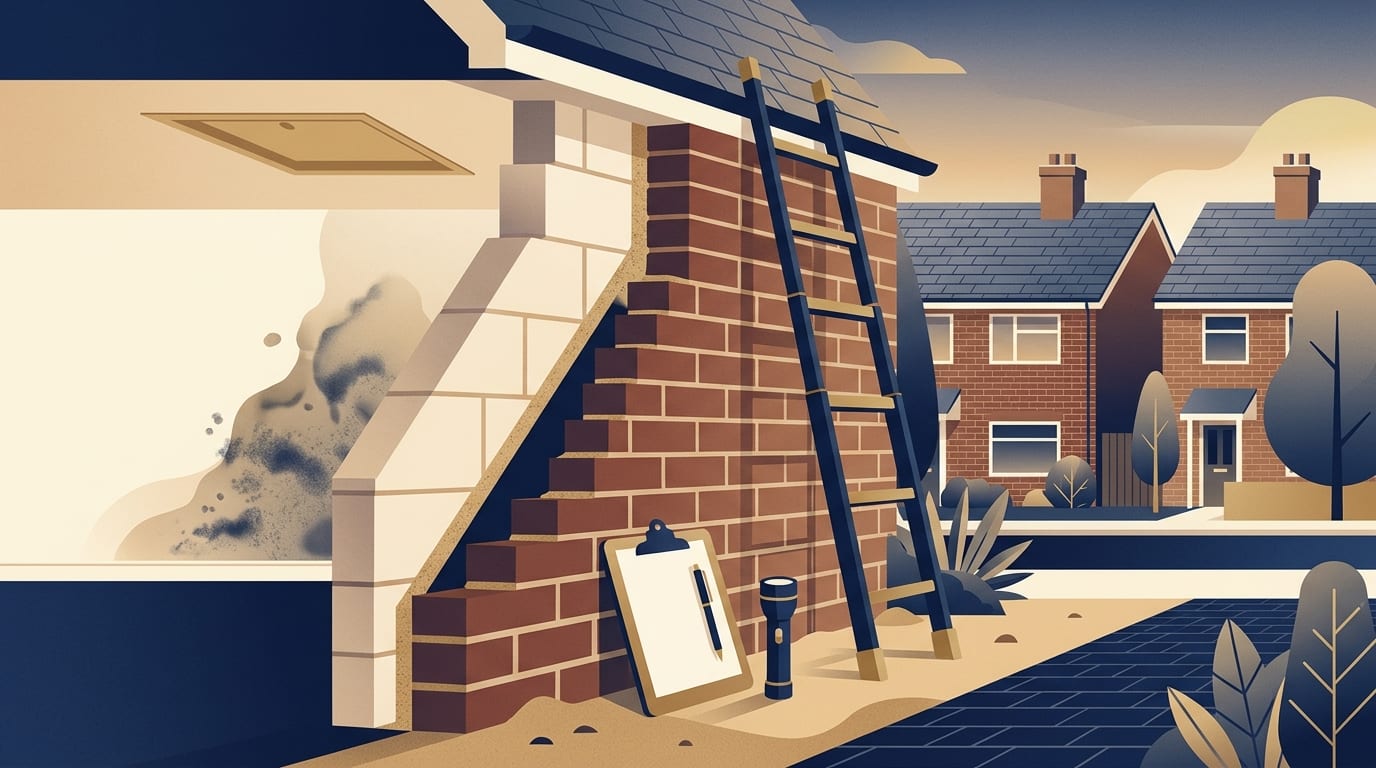
A cavity wall is built with two distinct layers of brick or blockwork separated by a hollow space. Cavity walls are likely to be found in homes built from 1920 onwards.
Cavity wall insulation is designed to fill this hollow space and reduce the amount of heat escaping from the building. The insulation material is injected directly through the outer wall of your home. Cavity wall insulation should be installed by a professional installer.
If you live in a newer property, you may not need to think about retrofitting this insulation at all. Homes built in the past 20 years or so have likely already been insulated during construction. Retrofitting is not suitable for every building, which is why a proper check of the walls comes first.
Why cavity wall insulation goes wrong
Not every house is built to hold material inside its external walls. Reference sources say many properties insulated under successive government-backed schemes were installed incorrectly or were unsuitable for the property. Incorrectly installed insulation can let water seep into walls, causing structural problems, damp patches and mould.
One major factor is the local weather. Walls that are regularly exposed to wind-driven rain are not suitable for cavity wall insulation. That is one reason an exposed wall is a poor candidate for the work.
The physical size and state of the cavity also matter. The gap between the inner and outer layers of the wall should be at least 50 millimetres wide to take insulation safely. The walls need to be in good condition and the cavity itself must be clear of rubble. A bridged cavity, where something spans the gap between the two layers, is a named cause of penetrating damp, and only an inspection can show whether one is present.
Older buildings face specific risks. Cavity wall insulation installed in older buildings can create problems with moisture retention. The age and condition of the walls matter, which is why a proper check comes before any fill goes in.
Signs that point to a problem
Damp patches and mould on walls are the usual signs of damp. If you see them on an outside wall of a house with retrofitted insulation, they are worth investigating, but they do not show that the insulation is the cause.
The signs to describe to a surveyor are:
- Damp patches on an outside wall
- Mould on an outside wall
- Damp or mould that a survey report has flagged
These signs have several possible causes, and the causes can overlap. Penetrating damp is water getting in from outside due to defects in the building. Condensation is a different problem, so the signs alone cannot tell you which one you have.
Do not open up, drill into or probe the walls to check the insulation yourself. Owners should not assume they will be able to diagnose damp themselves, so leave it to a qualified surveyor or specialist.
Is it the insulation or something else?
It is easy to blame cavity wall insulation the moment you see damp, but the reality is often more complicated. Building defects and different types of damp frequently overlap. The damp patches you see could be caused by the insulation, by a completely unrelated defect, or by a combination of both.
Condensation is the most common form of damp, and it has its own causes. A surveyor can tell you whether the marks you see are condensation or something else.
Penetrating damp can have causes other than the cavity fill. Water gets in from outside due to physical defects in the walls, roofs, windows or floors. The checks listed for penetrating damp include:
- Broken seals around windows
- Cracks in the external render
- Missing or broken roof finishes
- Other defects in the walls, roofs, windows or floors
Any of these defects can let water in, whether or not a home has cavity wall insulation. Because these causes overlap, landlords or homeowners should not assume they will be able to diagnose the problem themselves. You must use appropriately qualified contractors to inspect the property, as recommended by official government guidance, to tell you exactly what is letting the moisture in.
How a surveyor investigates the walls
To get a straight answer, you need a professional to inspect the building. A damp surveyor should be able to carry out a damp survey, identify the root cause of the issue, and identify which type of damp it is. They look at the whole house, not just the cavity walls, to ensure they do not miss overlapping defects.
A physical inspection of the property is always preferred over an assessment based on photographs. A surveyor needs to look at the damp patches, check the external walls for cracks or broken seals, and understand how the building is ventilated. They will use their expertise to track the moisture back to its source.
If they suspect the cavity wall insulation is at fault, the surveyor may recommend further investigation. Your surveyor will tell you what type of specialist to call next.
When you hire someone to investigate, it is vital to get an independent assessment. You can read more about how to get an independent damp survey to ensure you get unbiased advice. Independent advice keeps the diagnosis separate from anyone selling you the work.
When removal is considered
Whether removal is needed is for a qualified surveyor or specialist to say after inspecting the wall. Removal is not automatically the answer, and the surveyor's findings decide it.
Removal may be discussed if a surveyor finds the house was unsuitable for the fill. Walls regularly exposed to wind-driven rain and a cavity narrower than 50 millimetres are two of the points Which? lists, along with walls that are not in good condition or not clear of rubble. Whether a particular wall needs the fill taken out is for the surveyor and the specialist to say.
The same goes for a bridged cavity or a poor installation. Only an inspection of the wall can show whether either is present.
Before you commit to removal, check your paperwork. A guarantee may exist from when the work was done, so ask the installer or the seller.
What removal involves
Extracting wet or failed insulation from a cavity wall is a specialist job. It is not something to attempt yourself, and your surveyor can point you to the right type of specialist.
The final cost of this work depends heavily on the size of your property, the condition of the walls, and the type of fill that was originally injected. No reliable price for removal was found, so none is given here. Approach specialists directly. Tell the contractors exactly what your surveyor found and ask for detailed, written quotes.
Treat rough estimates given over the phone with caution. Ask for a written quote based on a visit and on the surveyor's report, and check what the quote includes.
Ask the surveyor and the specialist what to do about the damp patches afterwards, and how long to wait before repairing and redecorating.
Buying a house with cavity wall insulation
If you are buying a home that has retrofitted cavity wall insulation, you must protect yourself by commissioning a proper home survey. Relying solely on a mortgage valuation is a common mistake. A mortgage valuation is not a survey: it is a limited check carried out for the lender's benefit to confirm the property is worth the loan amount.
Instead, you should choose a survey level that matches the age, type and condition of the property. Home surveys follow three RICS levels. Level 1 describes the condition of the property, flags risks and urgent defects, and suits conventional, newer homes in good condition. Level 2, still widely called a HomeBuyer Report, suits conventional homes in reasonable condition and adds advice on repairs and maintenance. It is a visual, non-intrusive inspection and comes as a survey only or a survey and valuation. Level 3, still widely called a building survey or full structural survey, is the most detailed and suits older, larger, altered, unusual or run-down homes, or homes you plan to alter.
This table compares the three levels of home survey to help you choose the right option.
|
Survey level |
Estimated price range |
Typical inspection time |
|---|---|---|
|
Level 1 |
£300 to £450 |
1 to 2 hours |
|
Level 2 |
£400 to £950 |
2 to 4 hours |
|
Level 3 |
£600 to £1,500 or more |
4 to 8 hours |
The table shows typical 2026 ranges and standard inspection times, but local quotes will differ based on the size, age and location of your property. Reports usually follow within about 3 to 10 working days.
When you instruct a surveyor, read the terms of engagement carefully. Buyers are sometimes surprised that the surveyor did not lift carpets, move furniture or test services, but this is standard practice for visual inspections. If the surveyor spots signs of damp or unsuitable insulation, their report will use condition ratings shown as traffic lights to highlight the risk.
If the surveyor recommends further investigation into the cavity walls, do not ignore it. Book the specialist checks well before you exchange contracts. Once you have the results and any repair quotes, you can decide whether to proceed with the purchase, renegotiate the asking price, or walk away, keeping your conveyancer involved throughout.
If you are buying in Scotland, the system is different. The seller must provide a Home Report before marketing the property, which already includes a Level 2 survey and valuation.
Using regulated surveyors and consumer protection
When you hire a professional to inspect a home for damp or insulation problems, you must ensure they are properly qualified. Look for the letters AssocRICS, MRICS or FRICS after the surveyor's name, and the words RICS Regulated for their firm. You should confirm both of these details on the official RICS Find a Surveyor service before you pay any money.
Under the Consumer Rights Act 2015, any service you pay for must be carried out with reasonable care and skill.
Keep your consumer rights in mind when booking online or over the phone. Services arranged this way normally carry a 14-day cooling-off period. However, if you ask the surveyor to start the work inside that 14-day window, you will have to pay for what has been done if you subsequently decide to cancel.
Repairs to a wall you share with a neighbour
If damp has led to repairs on a wall shared with a neighbour, the Party Wall etc. Act 1996 may apply. What follows summarises the Act and is not legal advice, so ask a solicitor if you are unsure.
The Party Wall etc. Act 1996 applies in England and Wales only. Under this law, a building owner must give written notice before working on an existing party wall or structure, building on or at the boundary, or excavating near a neighbour's foundations. For party structure works, this notice must be served at least two months ahead of the planned start date, and one month ahead for new boundary walls and excavations.
Once you serve the notice, your neighbour has 14 days to respond. Silence counts as a dispute under the Act. In a dispute, the owners must appoint one agreed surveyor or one each, who will then produce a party wall award to govern how and when the repair work happens.
Starting party wall work without serving notice can lead to an injunction. A party wall award can be appealed in the county court within 14 days.
Common questions
What are the main cavity wall insulation issues?
The most common issues happen when insulation is put into an unsuitable property, such as one regularly exposed to wind-driven rain, or when it is installed poorly. This can allow water to seep across the cavity into the inner walls. The result can be damp patches and mould inside the home.
Can I remove failed cavity wall insulation myself?
No, removal is a specialist job. Do not try to open up the wall yourself, and ask your surveyor which type of specialist to contact.
How much does cavity wall insulation removal cost?
The cost depends heavily on the size of your property, the condition of the brickwork, and the specific type of insulation material that needs to be extracted. No reliable price for removal was found, so none is given here. Ask specialist removal firms for a written quote.
Will failed insulation cause structural problems?
It can. Reference sources say incorrectly installed insulation can let water seep into walls, causing structural problems, damp patches and mould. A damp surveyor will identify the root cause and which type of damp it is.
Is condensation the same as penetrating damp?
No, they are different problems, though their signs can overlap. Condensation is the most common form of damp. Penetrating damp is water getting in from outside due to defects, such as bridged cavities, broken window seals or cracks in render.
Next steps before you hire a surveyor
If you are worried about damp patches and suspect your cavity wall insulation is failing, take these practical steps to get the right advice:
- Note any damp patches or mould and where they are, ready to describe to a surveyor.
- Ask your surveyor which type of specialist to contact if they recommend further investigation.
- Do not try to drill into the walls or diagnose the problem yourself.
- Get two or three like-for-like quotes from regulated surveyors to carry out a damp survey.
- Ask the surveyor about their experience with your property type and whether they will talk the report through by phone.
- Use their findings to get written repair or removal quotes before you make any final decisions.
To start your investigation and get to the bottom of the damp problem, find a surveyor near you who can inspect your home and give you a clear, independent diagnosis.
Find a top rated surveyor near you
1,519 surveyors across the UK, each ranked on their Google rating and the number of reviews behind it. Start with your county: