A condition rating 3 in your survey report means the surveyor has found a defect that is serious and needs to be repaired, replaced or investigated urgently. This is the most serious band on the traffic light scale used in property inspections. RICS advises that you should get written quotations for these repairs before you are legally committed to the purchase.
What a condition rating 3 means
When you open your report and see red traffic light symbols, it is normal to feel anxious. A condition rating 3 is a direct warning from your surveyor about a specific part of the property. It means there is a defect that is serious or needs urgent attention or investigation.
The rating tells you that the defect carries significant risk. Failure to deal with the problem could risk serious safety issues or cause severe long-term damage to your property.
RICS advises that you find out how serious the problem is and what it would take to resolve before you commit.
However, a rating 3 does not always mean the house is falling down. It often means the surveyor has spotted something they cannot fully assess without specialist help. In these cases, the urgent action required is further investigation by a qualified contractor rather than an immediate building repair.
How the RICS condition ratings compare
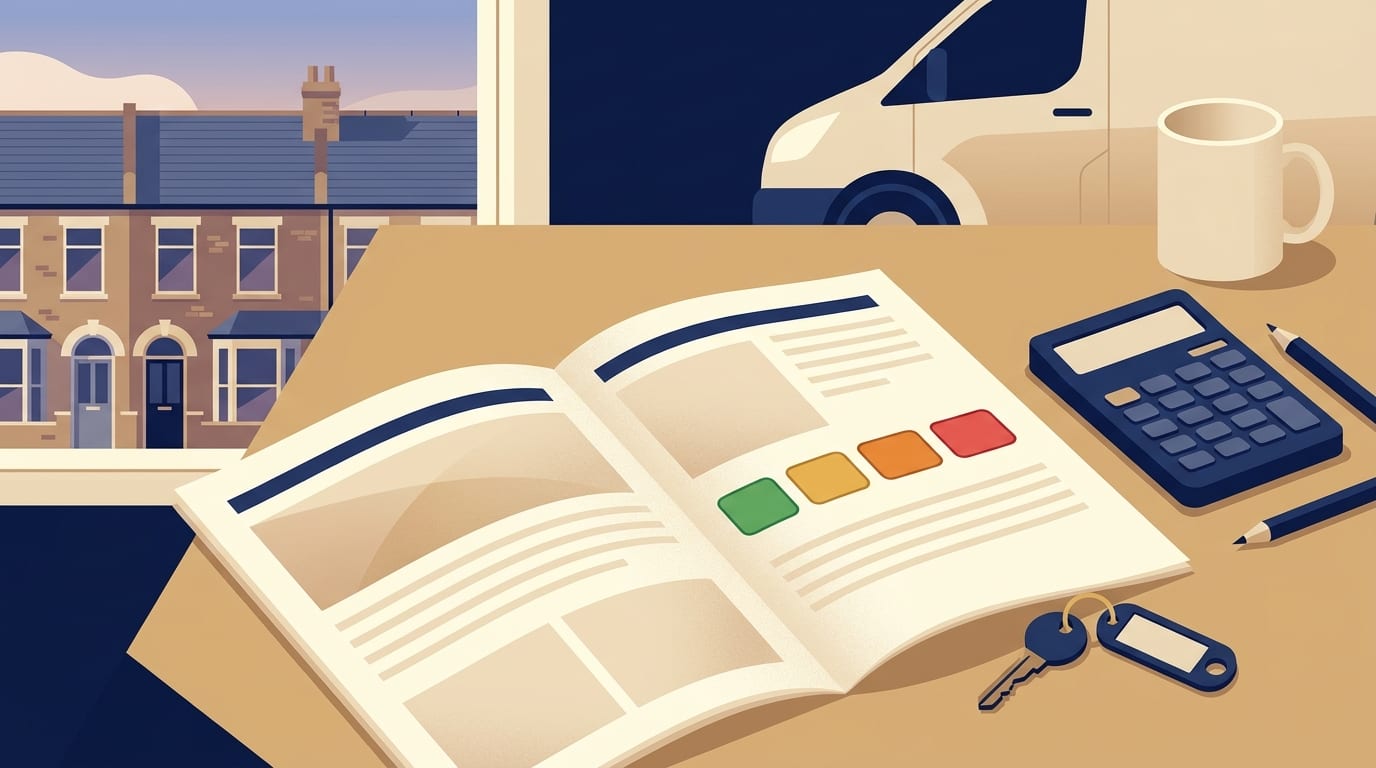
Survey reports use a standardised traffic light system to grade the condition of different parts of the property. This helps you prioritise which problems to tackle first. The ratings apply to the parts of the property the surveyor inspects, inside and outside.
The table below shows the official condition ratings used in home surveys and compares what each one means for you as a buyer.
|
Condition rating |
What it means |
|---|---|
|
Rating 3 (Red) |
Defects that are serious and/or need to be repaired, replaced or investigated urgently. |
|
Rating 2 (Amber) |
Defects that need repairing or replacing but are not considered to be either serious or urgent. The property must be maintained in the normal way. |
|
Rating 1 (Green) |
No repair is currently needed. |
|
NI |
Elements not inspected. |
|
R |
Documents the surveyor may suggest you request before you sign contracts. |
These definitions are taken directly from the official description of an RICS home survey. The severity of the ratings determines your next steps, with a rating 3 demanding action before you proceed.
Why a rating 3 is not an automatic reason to walk away
A red rating is not an instruction to abandon the purchase. Instead, it is a tool that gives you a clear picture of what you are taking on.
If you are wondering whether to proceed, reading a guide on do you need a survey helps explain how these findings protect your investment. The survey has done its job by highlighting a hidden problem before it becomes your financial burden. You now have the opportunity to resolve the issue while the seller still owns the house.
Published research from the Home Owners Alliance in 2024 found that nearly a third of homebuyers who had a survey took action because of issues it flagged. Of those buyers, 10 per cent renegotiated the price and 9 per cent got the sellers to fix the problems.
A rating 3 simply pauses the process while you gather more information. Once you know exactly what the defect is and what it will cost to put right, you can make a calm and informed decision about whether the house is still right for you.
What further investigation means in a survey report
A rating 3 can also mean the surveyor wants an element investigated further. Where the surveyor cannot reach a conclusion with reasonable confidence, they will make a recommendation for further investigation.
This happens because residential surveyors carry out a visual inspection. The surveyor will note in the report if it was not possible to check any parts of the property that the inspection would normally cover. If they are concerned about these hidden areas, the report tells you about any further investigations needed.
When a report recommends further investigation, it states the affected element, why it needs checking, when this should happen and broadly who should carry it out.
Arranging these checks requires cooperation from the current owner. The professionals you hire may need access in a different way to the original surveyor. You will need to talk to the owner or the estate agent to make sure they will allow the specialist to carry out their checks.
Getting repair quotes before you commit
The most critical advice from official RICS consumer guidance is to act on a rating 3 before you are legally bound to buy the property. If the survey shows deficiencies, you must do more research to find out how serious they are and what it would take to resolve them.
You should get quotes from at least two experienced contractors for any work highlighted by a rating 3. Doing this gives you a realistic idea of the repair costs and helps you spot if one contractor is overcharging. You need these written quotations in hand before you make a legal commitment to buy.
You are not legally bound just because your offer was accepted. A written offer is always made subject to contract. As Citizens Advice explains, acceptance of an offer is not the binding point.
The legal commitment happens later at the exchange of contracts. At exchange of contracts both you and the seller are legally bound. If you drop out after that point, you are likely to lose your deposit. This is why all quotes and investigations must happen between receiving the survey and exchanging contracts.
What to do with your contractor quotes
Once you have your written quotes, you know exactly how much the rating 3 defect will cost to fix. You can now use this information to decide your next move. You have three main options to choose from, depending on how much the repairs cost and how much you want the property.
First, you can use the survey information to negotiate with the seller. This often means asking for a price cut equal to the repair costs you have been quoted. If the seller agrees, you proceed at the lower price.
Second, you can ask the seller to make the repairs before exchanging contracts. If you take this route, talk to your conveyancer about how the repairs will be checked before you complete.
Third, if the problem is too severe or the seller refuses to compromise, you can decide not to buy at all. If you are unsure how to start this conversation with the estate agent, you can read more about how to renegotiate the house price to help you prepare your strategy.
When several rating 3s add up
Sometimes a survey report comes back with multiple red ratings. When this happens, you need to look at the total cost of all the necessary repairs and investigations.
Multiple severe defects mean you will be managing several contractors at once. You must decide if you have the budget and the time to manage a large renovation project. Adding up the quotes will show you if the final cost pushes the property beyond its true market value.
It is vital that you do not ignore recommendations for further investigation just because there are too many of them. Each rating 3 represents a distinct risk to the building or your safety. Skipping the checks to save time will leave you entirely responsible for the costs once the purchase completes.
If the list of urgent repairs is overwhelming, speak to your conveyancer. They can advise you on how to present the total costs to the seller and explain the legal implications of taking on a property with so many unresolved issues.
Questions to ask your surveyor
Reading a survey report can be daunting, but you do not have to interpret it alone. A good surveyor will be happy to talk through the report with you on the phone. This conversation is often the fastest way to understand exactly how worried you should be about a rating 3.
When you ring your surveyor, have your report open and ask them to explain the context of the red ratings. Use this checklist of questions to guide the conversation:
- Which of the rating 3 issues do you consider the most urgent?
- Is this defect common for properties of this age and type in the local area?
- What specific type of specialist or contractor do I need to investigate this further?
- Did the seller mention any history of repairs relating to this problem?
- Are there any other parts of the property that might be affected by this defect?
- What is the worst case scenario if this problem is left untreated?
Taking notes during this phone call will give you clear instructions on who to hire next. It also helps you explain the severity of the problem to your conveyancer and the estate agent.
Common questions
Does a rating 3 mean my mortgage will be refused?
A home survey is for your benefit, while a mortgage valuation is a separate check for the lender. What a lender does about a defect is the lender's decision, so tell your conveyancer and ask the lender.
Should I inspect the loft or drains myself?
You should never attempt to diagnose defects or carry out structural checks yourself. Do not enter confined lofts, lift heavy drain covers, or disturb materials that may contain asbestos. Always hire experienced contractors to carry out further investigations safely.
Who pays for the further investigations?
You would normally pay the specialists and contractors you hire to investigate a rating 3, because you are commissioning the work before you commit to the purchase.
Can the seller refuse access for specialists?
The professionals may need access in a different way to the original surveyor, so talk to the owner to make sure they will allow it. If access is refused, tell your conveyancer.
Will a rating 3 make the house unsellable?
A rating 3 highlights a specific defect and does not mean the property cannot be sold. The rating is information you can use, for example to renegotiate the price, ask the seller to fix the issue, or decide not to buy.
Next steps for your property purchase
Finding a rating 3 in your survey report requires a methodical response. Rushing to exchange contracts without understanding the problem will leave you entirely responsible for the repair bills. Follow these steps to protect yourself and your deposit.
- Read the whole survey section carefully and check the limitations box to understand what could not be inspected.
- Ring your surveyor to talk through the report and clarify exactly what type of specialist is needed.
- Get at least two written quotes from experienced contractors to understand the true cost of repairs.
- Share the survey findings and the contractor quotes with your conveyancer.
- Decide whether to proceed at the current price, renegotiate, ask the seller to fix the issue, or walk away.
A severe defect does not have to ruin your plans, provided you take the right professional advice before you commit. Taking the time to gather quotes ensures you only pay what the property is truly worth. If you are just starting your property search and want to line up your professional team early, you can find a surveyor near you to guide you through the process.
Find a top rated surveyor near you
1,519 surveyors across the UK, each ranked on their Google rating and the number of reviews behind it. Start with your county: