A survey on a leasehold flat is not a legal requirement but it is highly recommended. When you buy a flat you share the roof, walls and communal parts with other residents, and your share of repairs usually arrives through service charges or a reserve fund. A survey can flag building wide problems such as roof damage or external wall issues before you are legally committed to paying for them.
Finding out about problems with the flat and the building before you exchange contracts is up to you, and for legal questions you should ask your conveyancer or solicitor.
Many flat buyers mistakenly believe the mortgage valuation acts as a safety check on the property. According to Citizens Advice, the valuation done for the lender is not a survey. The valuation simply confirms to the bank that the flat is worth the money they are lending you. A mortgage valuation is a limited check for the lender's benefit, and the surveyor carrying out the valuation may not even visit the property.
You arrange and pay for the home survey yourself. If the report uncovers problems, you must decide whether to go ahead, walk away, or negotiate the price down to cover the cost of the repairs.
Why the building matters as well as the flat
When you purchase a leasehold flat, you share a building with other residents. Leaseholders usually pay for repairs and maintenance through service charges or a reserve or sinking fund. The lease sets out the exact obligations, so ask your conveyancer to explain them.
Building-wide problems such as roof damage or external wall issues are typically paid for by leaseholders together. A survey can reveal issues that may increase your service charge in the future, such as major redecoration.
In older converted buildings the service charge may seem low but hide ongoing repairs.
What a surveyor can inspect in a flat
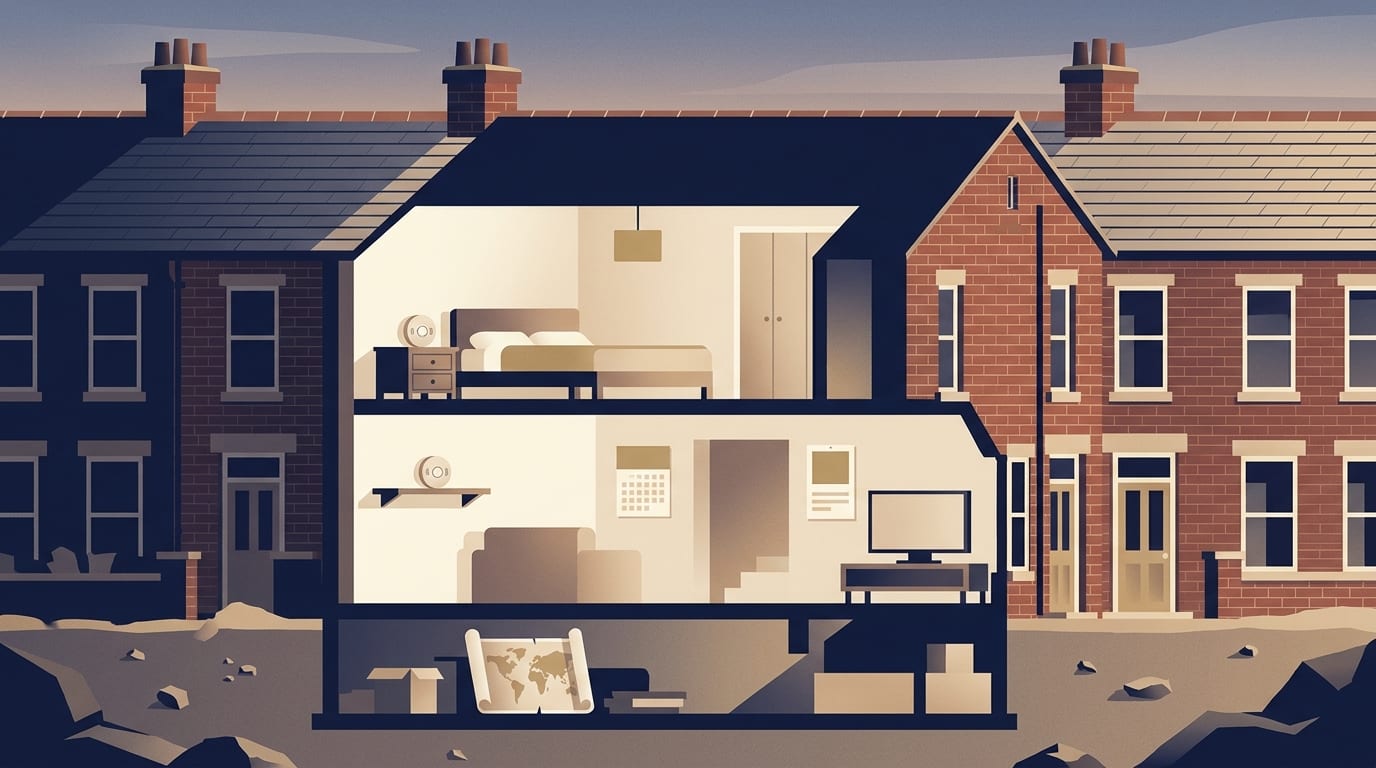
A surveyor inspecting a flat will inspect the inside of your flat, but their job also extends outside your front door. You should always ask the surveyor to check the building as well as the flat, inspecting as much as possible, particularly the roof, drains, walls and any basement.
According to the RICS Level 1 description for flats, the surveyor assesses the general condition of the outside surfaces of the building. They will inspect the access and communal areas that lead directly to the subject flat, such as shared hallways and staircases. Roof spaces are only inspected if they are accessible from within and owned by the subject flat.
Because the surveyor cannot always access every part of a large block, a survey cannot guarantee you will uncover every shared building problem, nor can it prevent a service charge. It gives you a visual assessment of what the surveyor can see.
This table shows what a standard home survey typically covers and excludes when inspecting a flat.
|
Inspection area |
What the surveyor does |
What the surveyor excludes |
|---|---|---|
|
Inside the flat |
Checks walls, floors, ceilings and windows |
Does not lift carpets or move heavy furniture |
|
Roof space |
Looks inside if accessible from your flat and owned by you |
Does not inspect roof spaces that are not accessible from within or not owned by your flat |
|
Outside the building |
Assesses the general condition of outside surfaces |
Does not inspect external wall systems |
|
Communal areas |
Checks access and areas leading directly to your flat |
Does not inspect drains, lifts, fire alarms or security systems |
This table follows the RICS Level 1 description for flats, and your terms of engagement will set out the detail.
What is not inspected in a block of flats
A common mistake among flat buyers is not reading the terms of engagement and being surprised by what the surveyor leaves out. A surveyor provides a visual, non intrusive inspection. They will not lift floorboards, drill into walls, or test services.
In a block of flats, a Level 1 survey does not inspect these:
- Drains.
- Lifts.
- Fire alarms.
- Security systems.
- External wall systems.
Because external wall systems are not inspected, the surveyor will not test or diagnose the safety of any cladding on the outside of the building. If you are buying a flat in a block with cladding, ask your conveyancer whether an EWS1 form is needed.
If the surveyor has specific concerns about any of these excluded areas, further investigation will be recommended before making a legal commitment to purchase. Finally, the surveyor assumes there is an asbestos register and an effective management plan in place and does not consult the dutyholder.
Service charges and major works
The money for shared repairs usually comes from leaseholders through service charges or a reserve or sinking fund, and the lease sets out the exact obligations.
When you are buying a flat, you must ask the seller's agent for service charge accounts and details of planned major works.
Surveyors do not give legal advice on contracts, boundaries or disputes, so you must pass the lease and all legal questions to your conveyancer or solicitor.
However, the survey gives you a physical reality check to compare against the paperwork. If your surveyor reports a problem with the building and the paperwork shows no planned works, ask your conveyancer how the cost of repairs would be shared.
Which survey level suits a flat
Home surveys follow three RICS levels, and the price is driven by the survey level, property value, size, age, complexity and location. The surveys are sold at a fixed fee quoted up front.
Level 1 describes the condition of the flat, flags risks and urgent defects, and suits conventional, newer homes in good condition. Level 2, still widely called a HomeBuyer Report, suits conventional homes in reasonable condition. It adds advice on repairs and maintenance, and comes as a survey only or a survey and valuation. Level 2 is a popular choice for most people buying a conventional flat, and a Level 2 inspection typically takes two to four hours.
Level 3, still widely called a building survey or full structural survey, is the most detailed report. Reports use condition ratings shown as traffic lights to highlight the urgency of each defect.
This table shows the typical cost range for each survey level on a flat.
|
Survey type |
Best property type |
Typical flat cost |
|---|---|---|
|
Level 1 |
Conventional newer flats in good condition |
£300 to £900 |
|
Level 2 |
Modern purpose built flats in reasonable condition |
£400 to £1,000 |
|
Level 3 |
Older, unusual or converted flats |
£630 to £1,500 |
These are 2026 guide figures for flats, not quotes, and local quotes will differ. If you are unsure which to pick, the guide to choosing a Level 2 or Level 3 survey explains the differences in more detail.
Converted and older flats
For a modern purpose built flat, Level 2 is usually enough. However, for an older, unusual or converted flat, Level 3 is suggested. Level 3 is usually chosen for properties over 50 years old, of unusual design, listed or in poor condition.
According to the RICS consumer guide, Level 3 suits a large, older or run down property, a building that is unusual or altered, or one where major works are planned.
Converted flats fit the RICS description of a building that is unusual or altered, which is why Level 3 is often the better fit.
Choosing the cheapest survey level for an old or altered house is a common mistake.
New build flats
If you are buying a brand new flat directly from a developer, a snagging survey is the survey Home Owners Alliance suggests, rather than a standard home survey.
A snagging survey is a specialist inspection designed specifically for newly constructed properties. Check the warranty and policy documents that come with a new build flat.
The resulting report can be given to your developer so that they can put defects right.
Regulation and protection for flat buyers
When hiring a surveyor, it is vital to check their credentials. Look for the letters AssocRICS, MRICS or FRICS after the surveyor's name, which show they are an associate, member or fellow of the Royal Institution of Chartered Surveyors. You should also look for the words RICS Regulated for the firm itself. You can confirm both of these on the RICS Find a Surveyor service.
Using a regulated firm protects you if things go wrong. RICS regulated firms must have a formal complaints handling procedure in place. They must also give consumers free access to an independent alternative dispute resolution provider, and hold professional indemnity insurance. The RPSA is another recognised body for residential surveyors with its own survey products.
Under the Consumer Rights Act 2015, any service you pay for must be carried out with reasonable care and skill. If you arrange your survey online or by phone, the contract normally carries a 14-day cooling-off period. However, if you ask for the inspection to start inside that 14-day window, you must pay for what has been done if you later decide to cancel.
Questions to ask before you book
Good advice starts with picking the right professional. You should get two or three like for like quotes that clearly state the survey level, whether a valuation is included, and the turnaround time for the report. Comparing quotes that are for different levels or exclude a valuation is a common mistake.
Before you instruct a firm, ask them these questions to ensure you get the right service:
- Do you have experience inspecting this specific type of flat?
- Will you look at the shared roof, drains, walls and basement?
- Which survey level do you recommend for this building?
- Does the quoted price include a valuation?
- Will you talk through the report findings by phone?
A surveyor who knows the local housing stock will be familiar with common defects in nearby blocks of flats. A phone call to talk through the report can help you understand which defects are minor and which are serious.
Finally, book the survey once your offer is accepted and well before you exchange contracts. Booking too late can delay exchange and cause stress for everyone in the chain.
Common questions
Do cash buyers need a survey for a flat?
Propertymark advises cash buyers to organise a survey once an offer is accepted. A mortgage valuation is not a substitute for a survey, and a survey cannot promise to uncover every problem in a shared building.
Who pays for repairs in a block of flats?
Leaseholders usually pay through service charges or a reserve or sinking fund, and the lease sets out the exact obligations. Ask your conveyancer to explain them.
Will a survey tell me if the cladding is safe?
No, a standard home survey does not inspect external wall systems or test cladding materials. If you are buying a flat in a block with cladding, ask your conveyancer whether an EWS1 form is needed.
How long does a flat survey take?
A Level 1 inspection takes roughly one to two hours, while a Level 2 inspection typically takes two to four hours. A Level 3 inspection is the most detailed and can take four to eight hours. After the visit, the written report usually follows within about three to ten working days.
Next steps for your flat purchase
Once your offer is accepted, you should move quickly to understand the building and its ongoing costs.
- Ask the seller's agent for service charge accounts.
- Request details of any planned major works and the reserve fund balance from the seller.
- Get two or three like for like quotes from regulated surveyors.
- Match the survey level to the age, type and condition of the property.
- Instruct your conveyancer to review the lease and check the management pack.
- Use the survey findings to get repair quotes before deciding whether to proceed, renegotiate or walk away.
Finding the right professional early in the buying process gives you time to understand the building you are moving into and the potential costs you will share. You can find a surveyor near you and request quotes for your flat purchase.
Find a top rated surveyor near you
1,519 surveyors across the UK, each ranked on their Google rating and the number of reviews behind it. Start with your county: