A thermal imaging survey uses a camera that records surface temperatures to help you see where heat may be escaping from your home. It can point out areas where a wall or ceiling surface differs from the rest, giving you a clue about cold spots and heat loss. Because the camera shows surface temperatures only, it requires a trained person to interpret the images. It provides a visual clue rather than a firm diagnosis of a defect.
What a thermal imaging survey is
Thermal imaging, also known as thermography, uses specialist cameras to capture infrared radiation and display it as a visible image. Every object gives off some heat, and the camera translates these temperature differences into a picture of surface temperatures. Surveyors and energy assessors use this equipment to scan the inside or outside of your house to look for temperature anomalies.
The camera records surface temperatures and the images need to be interpreted by a person. You might see thermography offered on its own to investigate a specific cold room, or as part of a wider inspection covering the whole property. For example, Which? says a detailed home energy audit, which costs more than an EPC, may include thermal imaging as well as one-to-one advice.
Thermography is a recognised method for investigating building defects. Official GOV.UK guidance on damp and mould mentions thermography, environmental monitoring and microbial sampling for complex cases. It provides a visual clue that helps the surveyor narrow down the source of a problem without causing damage to the property.
What a thermal imaging survey can show
A surveyor uses a thermal camera to look for temperature patterns that suggest an underlying problem within the building fabric. The images may point to areas where insulation is missing, where warm air is escaping, or where moisture is present, but they are a clue and not a diagnosis. The camera does not see through walls, but it sees the effect that hidden problems have on the surface of the wall. By mapping these surface temperature variations, the surveyor can build a picture of how the house performs.
In building inspection, thermography is used for a wide variety of tasks to assess condition and performance. These include the following uses.
- Roof inspection to check for defects.
- Building envelope inspections to assess general performance.
- Energy losses across the property.
- Insulation audits.
- Moisture detection in walls and roofs.
- Locating pest infestations.
Many people want to know where a house loses heat. For context, a Which? guide dated 5 May 2026 says uninsulated homes lose more than a third of their heat through the external walls, and up to 15 per cent of lost heat goes through the ground floor. A thermal scan may show which surfaces are coldest, but it does not measure how much heat is lost.
What it cannot show
You must understand the limits of thermography before you pay for a survey so that you manage your expectations. A thermal camera cannot see inside a wall cavity, under a fitted carpet or behind heavy furniture. Only surface temperatures can be detected directly, meaning the surveyor must deduce what is happening behind the surface based entirely on the temperature pattern they see.
The equipment itself also has limitations that affect how the results should be read. Most thermal cameras have an accuracy of plus or minus two per cent or worse when measuring temperature. This means the readings need careful interpretation and should never be treated as absolute or exact measurements. Cameras with low pixel counts also make it harder to distinguish nearby targets.
Thermal imaging alone does not diagnose the exact cause of a defect, nor does it guarantee a property is free of problems. A cold spot on a wall can have more than one possible cause. The camera highlights the anomaly, but the surveyor must use their knowledge of building construction to work out why it is happening. They may need to use other tools or recommend further investigation to give you a definitive answer.
Why conditions on the day matter
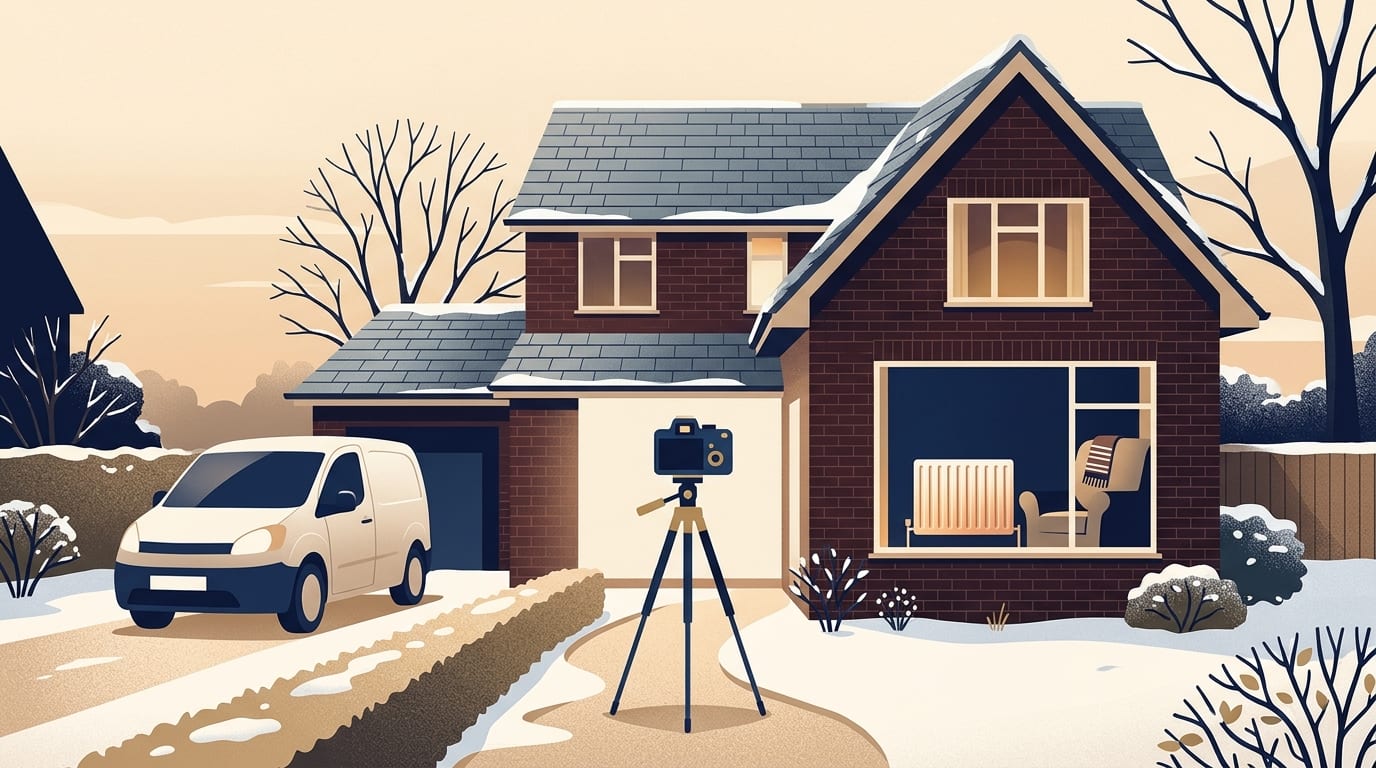
Because thermal cameras measure surface temperatures, the environment on the day of the survey strongly affects the results. Reflected radiation, such as bright sunlight shining directly on a wall, can cause measurement errors and mask the true thermal performance. Outdoors, wind-driven convective cooling may also need to be considered. Emissivity, which is how effectively a surface gives off heat, also varies between materials and can distort the readings if not accounted for.
Your surveyor will advise you on the specific weather conditions required for a reliable inspection. They will also tell you how to prepare your house, including any heating needed. No set temperature is laid down for buildings, so follow your surveyor's instructions.
Your surveyor will say if the conditions on the day mean the visit needs to be rearranged. Surveying in the wrong conditions can lead to inaccurate images. You must follow the surveyor's instructions regarding heating and ventilation to get a useful result.
Thermal imaging, damp and moisture
Thermal imaging is useful when you have a cold or damp house, but it is only part of the diagnostic process. The camera can hint at a cold or damp area, but it does not name the cause, and damp can have more than one cause. To identify the exact type of moisture problem, you need a professional to interpret the clues and conduct a full damp survey.
You can learn more about deciding between condensation or damp if you are unsure what you are looking at. An independent damp survey should identify the root cause of the issue and which type of damp it is. Official guidance on damp and mould mentions thermography, environmental monitoring and microbial sampling for complex cases.
Consistently high relative humidity in a home can be assessed using environmental monitors or a moisture meter, rather than just a thermal camera. You can read the official guidance on damp and mould for more detail on how complex cases are investigated. The government guidance states that an inspection is preferred over photographs, and that owners should not assume they can diagnose the cause of damp themselves.
Thermal imaging and your EPC
A thermal imaging survey is not an Energy Performance Certificate (EPC), and the two should not be confused. An EPC tells you how energy efficient a property is and gives it a rating from A to G. It includes information on energy use and typical energy costs, along with steps to improve the building's efficiency. It is valid for 10 years.
You can find more details in the official government guide to energy performance certificates. If what you need is an EPC, a thermal imaging survey is not a substitute for one.
If you want a deeper understanding of your home's energy performance, you can pay for a detailed home energy audit instead. This type of audit is more expensive than an EPC and may include thermal imaging as well as one-to-one advice from the assessor. You can read our energy performance certificate cost guide to understand the baseline price for the standard certificate.
What a thermal imaging survey costs
No reliable published price for thermal imaging surveys was found, so none is given here. Prices are quoted per job and depend on the size of your property and the report you want.
A detailed home energy audit, which may include thermal imaging, is more expensive than an EPC according to Which?, but no price for thermal imaging is given there either.
To find out what you will pay, you need to ask local surveying firms or energy assessors for a written quote. Ask them to state exactly what is included in the price before you agree to proceed. Ensure the quote covers the inspection itself, the written report, and any follow-up advice you might need to understand the findings. Gathering two or three like-for-like quotes is a sensible way to compare what is on offer in your area.
What to ask before you book
Before you hire someone to carry out a thermal imaging survey, you should ask a few questions to ensure you get what you need. Not all surveys are the same, and the quality of the advice depends on the person who interprets the images. Use this checklist when you speak to prospective surveyors or energy assessors.
- Ask who interprets the images and what their professional qualifications are.
- Ask what type of report you will get and whether it includes practical repair advice.
- Ask what weather and heating conditions are needed on the day for an accurate reading.
- Ask whether the survey covers the whole house or just a specific problem area.
- Ask whether anything follows from the findings, such as a recommendation for further investigation.
A good surveyor will be happy to explain their process and tell you what the survey can and cannot achieve. They will also be clear about the limitations of their equipment and why they might need to use other tools alongside the camera.
Common questions
What is a heat loss survey?
The term is used loosely, so ask what a quote includes. A thermal imaging survey is one way to look at surface temperatures. It is a clue about heat loss and not a diagnosis.
Does a thermal imaging survey guarantee finding insulation faults?
No survey guarantees a property is free of defects or finds every single insulation fault. A thermal camera only detects surface temperatures, so it might miss a problem if the weather conditions are wrong. If an insulation defect does not change the surface temperature enough to be visible, the camera will not detect it.
Will a thermal imaging house survey tell me how to fix damp?
The camera may point to a cold or damp area, but it will not diagnose the cause. You will need a professional to interpret the images and use tools like a moisture meter to confirm the issue. Once the cause is identified, they can tell you how to fix it.
Do I need to heat my house before the survey?
Your surveyor will advise you on the weather and heating needed, so follow their instructions.
Find a surveyor near you
Deciding to book a thermal imaging survey is the first step towards understanding why your house is cold or where you are losing heat. To make sure you get a reliable result and useful advice, follow these steps before you commit to paying a fee. Proper preparation ensures you hire the right person and get a report you can actually act on.
- Identify whether you need a full home energy audit or just a check of a specific cold spot.
- Contact two or three local surveyors or energy assessors to discuss your property type.
- Ask for a written quote that details the scope of the inspection and the type of report provided.
- Confirm the preparation required, such as how long to leave your central heating on.
- Book the survey for a day that your surveyor says suits the weather conditions.
Take your time to compare quotes, check qualifications, and find a surveyor near you who can explain exactly what their service includes.
Find a top rated surveyor near you
1,519 surveyors across the UK, each ranked on their Google rating and the number of reviews behind it. Start with your county: