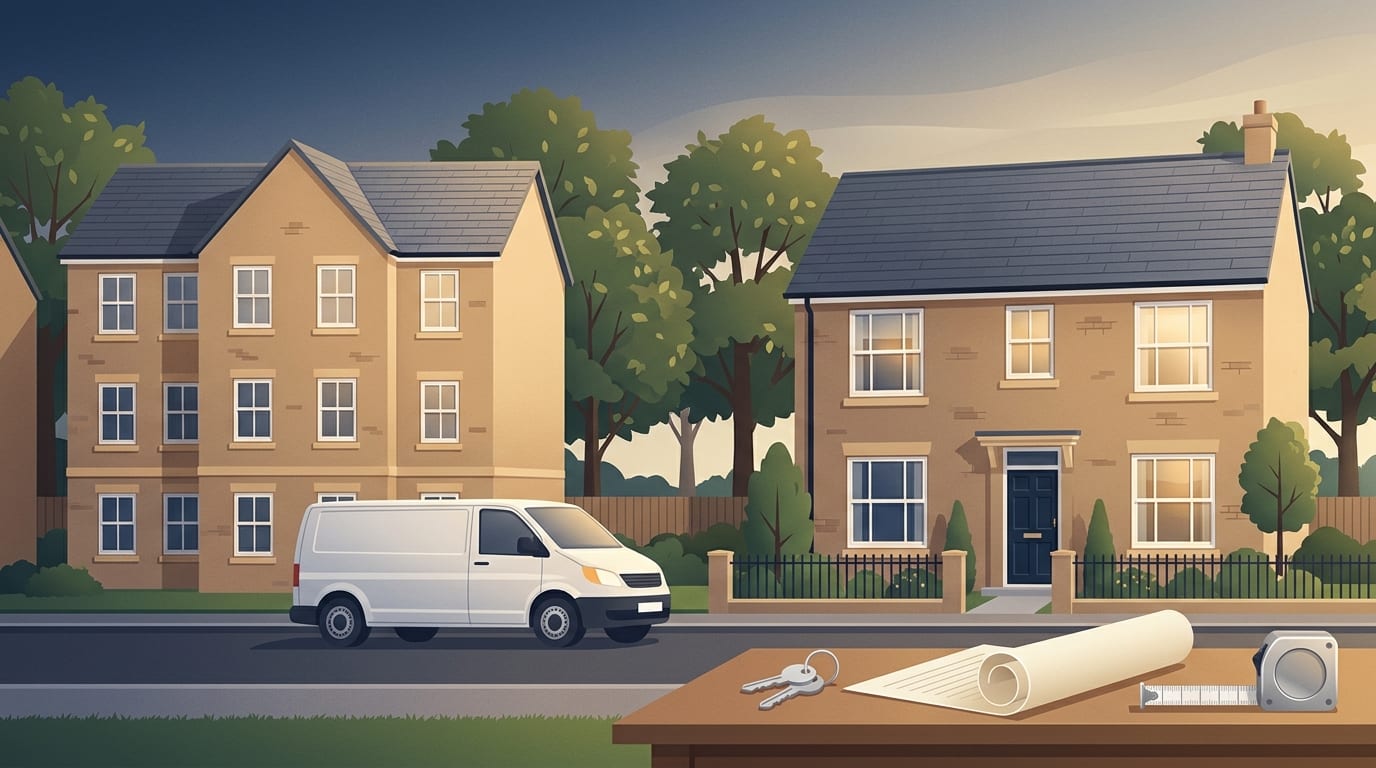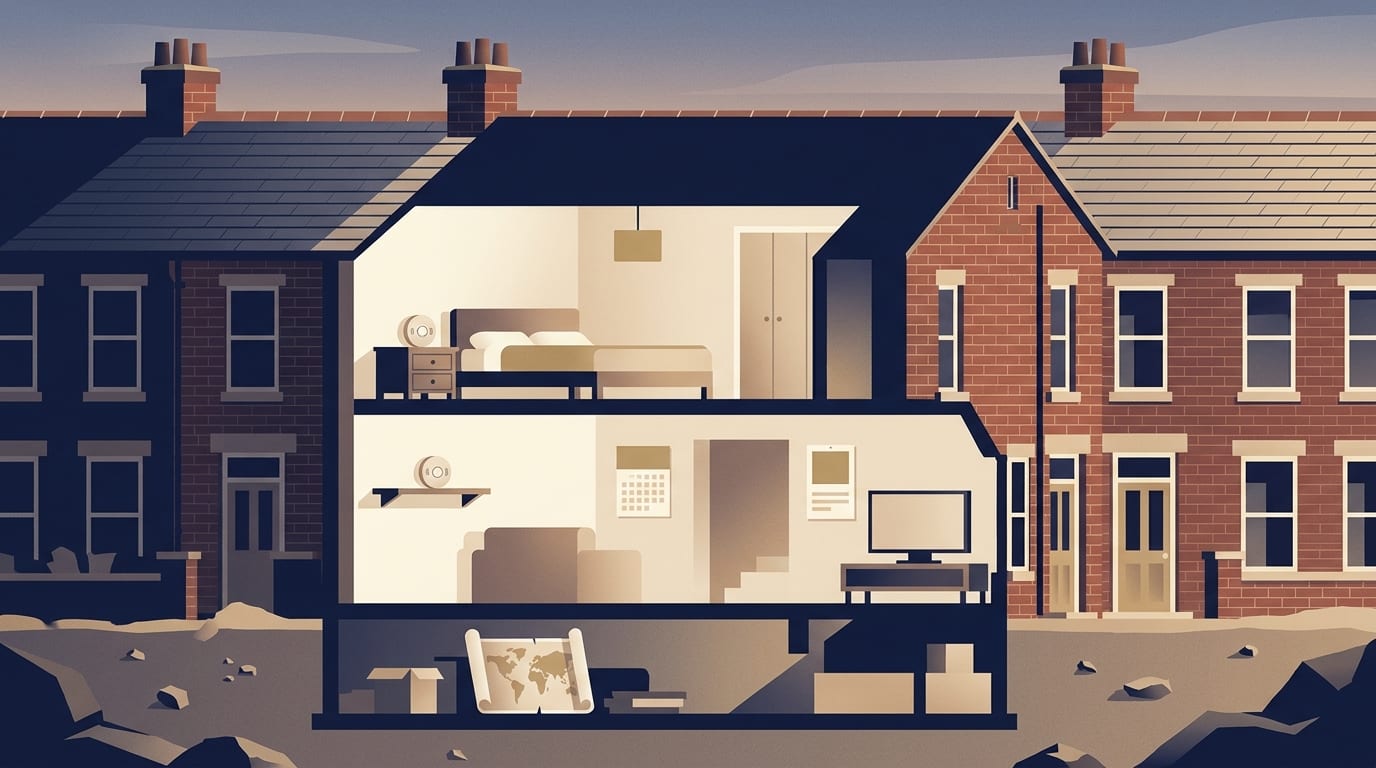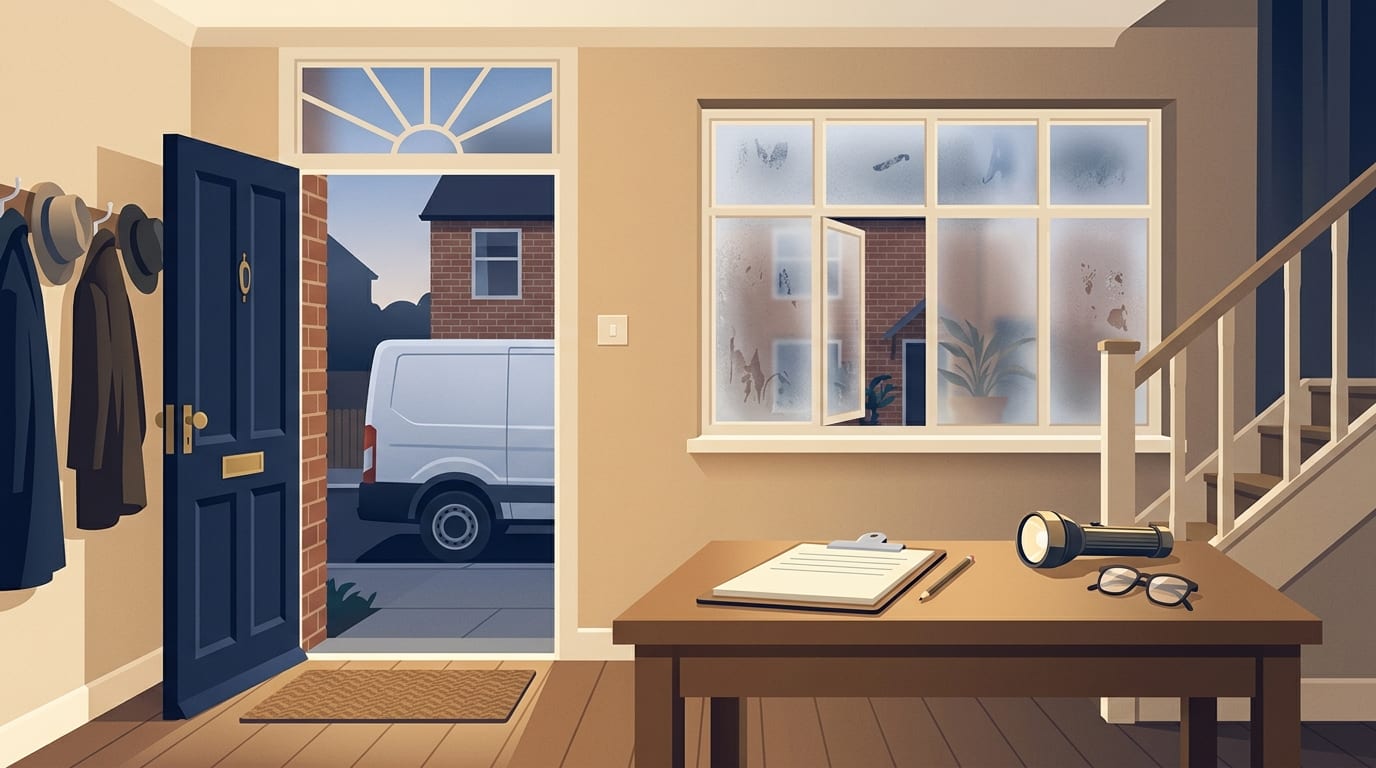
A house viewing is your chance to spot warning signs and ask the right questions, not a time to diagnose structural defects. You should look for obvious issues to raise with the estate agent and later your surveyor. A professional survey after your offer is accepted is where a surveyor looks properly. Citizens Advice notes that it is common to visit a property two or three times before deciding to make an offer.
Why viewings matter before you offer
The viewing stage is your opportunity to understand what you are buying before you involve solicitors and surveyors. You need to check that the property suits your needs and identify any obvious problems. Take your time to look closely at the rooms and the outside of the building.
Your goal at this stage is to gather information. You are looking for signs that might mean extra costs later. You are not expected to act as a building inspector. Keep every check to what you can easily see from the ground and from normal rooms.
You should never try to carry out your own structural checks. Do not climb into lofts or try to access the roof. Do not lift drain covers or pull up fixed carpets. You must not open walls, test the electrics or check the gas supply. Importantly, do not disturb any materials that might contain asbestos.
Instead, use the viewing to build a list of questions. Note down anything that looks damaged, smells unusual or seems out of place. You can then discuss these points with the estate agent. If you decide to proceed with an offer, you can pass your notes to your surveyor when you book them, so they know what concerned you.
Visit more than once
A single viewing may not be enough to make an informed decision. Your first visit is often about getting a general feel for the layout and deciding if you actually like the house. A second or third visit allows you to look past the furniture and focus on the condition of the building.
You should use these extra visits to estimate extra spending on repairs or decoration. Look closely at the age of the kitchen and the bathroom. Check the condition of the carpets and the state of the paintwork. You need to know what you will have to spend to bring the property up to your standards.
A sensible suggestion is to arrange your follow-up viewings at different times of day. A street that is quiet at midday might be very busy during the morning school run. The amount of natural light in the rooms will also change from morning to afternoon. Visiting at a different time gives you a better understanding of what living there will actually be like.
Paperwork and checks to ask for
When you view a property, the estate agent or the seller should have several important details ready for you. You must be shown an Energy Performance Certificate when buying. This document tells you how energy efficient a property is, which will affect your heating bills. The certificate rates the building from A to G, with A being the most efficient, and it is valid for 10 years.
You must also ask about the tenure of the property. Freehold means you own the building and the land it sits on. Leasehold means you own the property for a set period, but you do not own the land. A leasehold property usually involves paying ground rent to the landowner. You will also possibly face service charges for the maintenance of shared areas.
If the property is leasehold, you must check the lease length. You need to check that the remaining term on the lease is acceptable to your mortgage lender.
For new builds, ask the developer or agent if the property comes with a warranty. You should look for a recognised policy such as a Buildmark warranty from the NHBC. Finally, ask the seller for a breakdown of the normal running costs. You should ask about:
- Council tax bands and costs
- Water rates for the building
- Ground rent if the property is leasehold
- Service charges for shared areas
- Insurance premiums for the building
- Heating and general energy costs
Signs of damp and condensation you can see
Damp is a common concern for buyers. While you cannot diagnose the exact cause of damp during a viewing, you can spot the warning signs. Government guidance on damp highlights several things to look out for.
Condensation forms on colder surfaces such as window frames, corners and low points on walls. When viewing a room, look at the window frames and the corners of the room. Look at low points on the walls, particularly behind sofas or wardrobes if you can see them.
You should also trust your sense of smell. A musty smell without visible evidence of mould may indicate that there is mould hidden behind a surface.
If you spot these signs, they are clear reasons to ask questions. You should raise them with the estate agent and note them down for your surveyor. Owners should not assume they can diagnose the cause themselves, and as a buyer, you should not try to. A surveyor can look at it, and you can read how to tell condensation from other damp.
The outside of the house
The outside of a property can tell you a lot about its general condition. Before you go inside, or just after you finish your internal viewing, take a few minutes to stand outside. You should look at the building from the ground, preferably from across the street so you can see the whole structure.
You are looking for external signs of penetrating damp. Penetrating damp happens when water gets into the building from the outside. The external signs to watch for include:
- Broken seals around windows
- Cracks in the render on the walls
- Missing or broken roof finishes
These checks must be done safely from the ground. Do not use a ladder and do not try to access flat roofs or balconies that are not part of the normal viewing route. If you see cracks, broken seals or missing tiles, write them down. These are details to raise with your surveyor.
Free online checks for flood risk and energy
You can make several free online checks from home before viewing. Anyone can look up a property on the government find an energy certificate service. You can search for a certificate by postcode, street name and town, or by the certificate number. This allows you to read the full report and see the current rating before you view the house.
You should also check the long term flood risk for the area. The government provides a long term flood risk service for properties in England. This service shows an area's long term risk from rivers and the sea. It also covers the risk from surface water, reservoirs and groundwater, where data is available.
It is important to understand the limits of this service. It does not show how likely it is that an individual property will flood. It also does not cover flooding caused by blocked drains or burst pipes. It is a guide to the general area, not to the property.
Finally, you can check the local risk of radon gas. The UK Health Security Agency provides a radon map online. The darker the colour on the map, the greater the chance of a higher radon level in that area. If the house is in a darker area, you should ask the seller if they have ever carried out a test. The only way to know if a building has a high level of radon is to have it tested.
Tenure and lease questions for flats
Viewing a flat requires a slightly different checklist than viewing a house. Most flats are leasehold. As noted earlier, leasehold means you do not own the land the building sits on, and your ownership is limited to the length of the lease.
When viewing a flat, the lease length is an important detail to confirm. You must ask the estate agent exactly how many years are left on the lease. Do not accept a vague answer. You must check that the specific number of years is acceptable to the mortgage lender you plan to use.
You also need to ask detailed questions about the running costs of the building. Ask for the exact cost of the ground rent. You must also ask what the annual service charges are and what they cover. As a leaseholder, you will be expected to pay a share of these costs, so you need to know about them before you make an offer.
What to leave to a surveyor
Relying on the mortgage valuation is a common mistake. The valuation done for the lender is not a survey. It is a limited check purely for the lender's benefit. You should arrange your own independent survey rather than rely on the valuation.
You do not need to choose your survey level during the viewing, but you should keep the condition of the house in mind. The age, size and state of the property will dictate which type of survey you need. Citizens Advice provides clear guidelines on how to match the survey to the property.
A full structural survey suits large properties, those over 80 to 90 years old, or properties in doubtful condition. This is a very detailed inspection suited to complex buildings. A house or flat buyers report is a cheaper option. This level suits newer properties that appear reasonably sound, and it may recommend further specialist checks. You can choose between the survey levels once your offer is accepted, using the notes you took during your viewings.
What to tell the surveyor at booking
Once your offer is accepted, you should book your survey well before exchanging contracts. This is when the notes from your viewings become highly valuable. When you contact surveyors for quotes, you should tell them exactly what you noticed when you walked around the house.
Tell the surveyor if you smelled a musty odour, saw condensation on the window frames, or noticed cracks in the outside render. Mention if the property is over 80 years old, if it has been heavily altered, or if it is a leasehold flat. This information helps the surveyor recommend the correct level of inspection for your specific situation.
When sourcing a professional, ask about their experience with that property type and the local area. You should get two or three like-for-like quotes. Ensure these quotes clearly state the survey level, whether a valuation is included, and the expected turnaround time for the report. You should also ask whether the surveyor will talk the report through by phone once it is finished.
Common questions
What is a good house viewing checklist?
A good checklist focuses on what you can safely see and the paperwork you must check. You should look for visual signs of damp, check the outside walls and roof from the ground, and confirm the running costs. Always ask to see the Energy Performance Certificate and confirm whether the tenure is freehold or leasehold.
What to look for when buying a house?
You should look for a property that suits your daily needs while estimating any extra spending required for repairs or decoration. Look past the current owner's furniture and check the condition of the paintwork, the age of the kitchen, and the state of the windows. Use official online tools to check the local flood risk and energy ratings before you commit.
What should be on a house survey checklist?
Your personal survey checklist should include any warning signs you spotted during your viewings, such as cracked render, missing roof finishes or musty smells. You pass this list to your surveyor when you book them. The surveyor will then use their own professional checklist, matched to the survey level, to inspect the property.
Next steps before you offer
Before you contact the estate agent to make your offer, ensure you have completed these final checks:
- Visit the property two or three times at different times of the day.
- Read the Energy Performance Certificate on the official government service.
- Check the long term flood risk for the area online.
- Confirm the tenure and ensure any lease length is acceptable to your lender.
- Write down any external cracks, broken seals or signs of condensation.
- Ask the agent for a full breakdown of the ongoing running costs.
Once your offer is accepted, you should instruct a surveyor to inspect the property properly. You should get two or three quotes for a dedicated home survey, matching the level of the report to the age and condition of the building, and you can start by looking to find a surveyor near you.
Find a top rated surveyor near you
1,519 surveyors across the UK, each ranked on their Google rating and the number of reviews behind it. Start with your county: